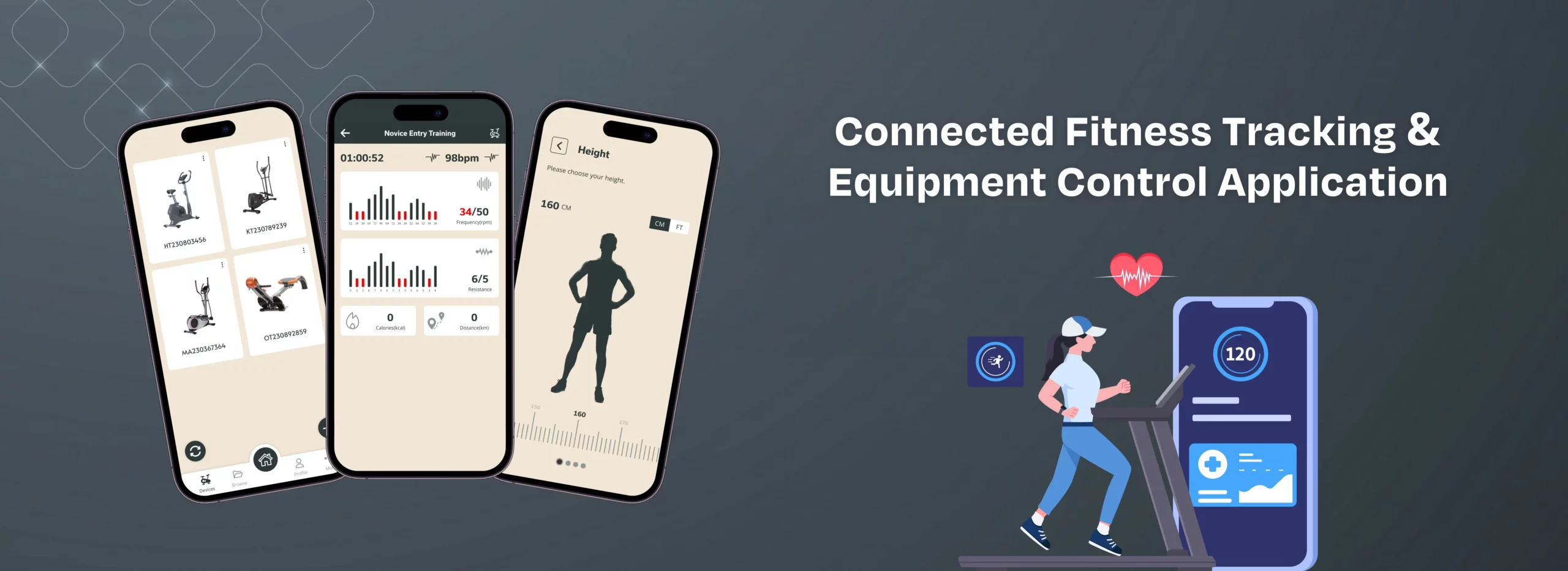
Connected Fitness Tracking & Equipment Control Application
About Client
Industry
Fitness
Location
Germany
Project Overview
The client is a well-established fitness equipment manufacturer producing a wide range of consumer-grade aerobic machines – including ergometers, cross-trainers, rowing machines, treadmills, and walking belts. With a growing product line and an expanding user base, the company had built a strong hardware reputation. However, the digital experience offered to users had not kept pace with the scale or ambition of the brand.
Users of the client’s fitness equipment had no reliable way to connect their devices to a unified platform, personalize workout settings, track long-term fitness progress, or follow structured training programs designed for their individual goals. The gap between the hardware capability and the software experience was becoming a barrier to user retention and product satisfaction.
The client engaged SculptSoft to design and implement the Connected Fitness Tracking and Equipment Control Application – a cross-platform mobile solution (Android and iOS) purpose-built to bridge that gap. The project focused on turning disconnected fitness hardware into a cohesive, intelligent, and data-driven fitness ecosystem.
Traditional Process
Before this engagement, users relied on a manual and disconnected approach to managing their workouts:
01
Manual Workout Tracking
Users manually recorded fitness progress using pen and paper or basic fitness apps, resulting in inaccurate workout data, inconsistent performance logs, and an unreliable fitness tracking experience.
02
Generic Exercise Equipment Settings
Users were limited to one-size-fits-all equipment configurations – fixed resistance levels and preset workout durations, with no ability to personalize settings based on individual fitness levels, body measurements, or training goals.
03
No Personalized Fitness Training Programs
Users depended on generic training programs sourced from fitness instructors or online platforms. These programs were not tailored to specific equipment types, personal fitness objectives, or individual health profiles.
04
Time-Consuming Manual Equipment Adjustments
Before and during every workout session, users had to manually configure fitness machine settings such as resistance, seat position, and duration. This repetitive process interrupted workout continuity and reduced overall exercise efficiency.
05
Lack of Real-Time Fitness Feedback and Motivation
Without real-time performance feedback, progress tracking, or goal-based motivation tools, users struggled to stay consistent with their workout routines, leading to reduced engagement and slower progress toward fitness goals.
06
No Centralized Fitness Progress History
Users had no access to a unified fitness history dashboard or long-term performance analytics. The inability to track workout trends, review historical data, or measure improvement over time made goal-setting difficult and progress invisible.
07
Minimal Integration Between Fitness Equipment and Tracking Tools
There was little to no integration between exercise equipment and digital fitness tracking platforms, making it nearly impossible for users to sync workout data, monitor health metrics, or build a connected fitness experience.
08
Rigid and Outdated Device Ecosystem
Users were restricted to a limited range of older equipment models, with no support for newer fitness device categories such as treadmills or walking belts – preventing a unified, multi-device digital fitness experience.
09
Data Drops Due to Equipment Response Latency
Traditional setups frequently experienced data loss, tracking freezes, and session breaks whenever a fitness machine encountered response delays or connectivity lag – compromising the accuracy and completeness of recorded workout sessions.
10
No Dynamic Goal Tracking or Personal Milestone System
Training without goal-oriented progress tools or real-time visual performance benchmarks made it difficult for users to compete against their own fitness history, track micro-milestones, or sustain long-term motivation.
Challenges Faced
Following the traditional process, both the client and users faced several challenges that affected personalization, workout continuity, data accuracy, and the overall digital fitness experience:
01
No Personalization in Fitness Equipment Settings
Users were unable to tailor workout experiences to their individual fitness levels, body measurements, or personal health goals due to the complete absence of personalized settings on the exercise equipment – resulting in a generic, one-size-fits-all training experience.
02
Difficulty Tracking Fitness Progress and Body Measurements
Without a centralized fitness tracking system or body measurement management tool, users found it nearly impossible to monitor their fitness journey, measure improvement over time, or make data-driven decisions about their workout routines.
03
Lack of Seamless Fitness Equipment Integration
The absence of integration between exercise equipment and digital fitness tracking tools severely hindered users’ ability to sync workout data, track health metrics, and maintain a continuous, connected fitness experience across sessions.
04
Inconvenient and Disruptive Equipment Adjustments
Manual configuration of fitness equipment settings before and during every session was time-consuming and disruptive, breaking workout flow, reducing training efficiency, and creating a frustrating user experience.
05
Low Workout Motivation and Inconsistent Training Habits
Without access to real-time progress updates, fitness achievement tracking, or goal-based motivation mechanisms, users lacked the behavioral reinforcement needed to build and sustain consistent exercise habits over time.
06
No Comprehensive Fitness History or Performance Analytics
The absence of a health history tracking system left users without visibility into long-term performance trends, making it difficult to identify patterns, set realistic fitness goals, or adjust training strategies based on actual progress data.
07
Restricted Hardware Compatibility Across Fitness Devices
Limited support for diverse fitness equipment models – particularly treadmills and walking belts prevented users with varied gym setups from accessing a unified digital fitness platform, reducing the product’s overall utility and reach.
08
Broken Workout Sessions from Hardware Latency and Connectivity Drops
Response delays and brief connectivity interruptions from exercise equipment hardware caused frequent data tracking failures, broken workout sessions, and incomplete performance metrics – eroding user trust in the platform’s reliability.
09
Multi-User Account Switching Friction in Shared Environments
In household or shared fitness environments, the inability to quickly and securely switch between user profiles created unnecessary delays and friction at the start of back-to-back workout sessions reducing overall platform usability.
Our Solution - Connected Fitness Tracking & Equipment Control Application
SculptSoft designed and developed Connected Fitness Tracking & Equipment Control Application – a cross-platform mobile solution (Android and iOS) that connects users to their fitness equipment through Bluetooth, delivers personalized training experiences, and builds a long-term health record for every user.
01
Personalized User Profiles for Tailored Fitness Experiences
Users can create and fully customize their fitness profiles with personal information, health data, and precise body measurements. This personalized profile system powers tailored workout recommendations, automatic equipment configurations, and goal-driven training experiences aligned with each user’s individual fitness level and objectives.
02
Seamless Integration with the Body Measurement Application
We implemented deep integration with the third party application, enabling users to track, sync, and manage accurate body measurement data within a unified fitness platform. This integration delivers a comprehensive, holistic view of fitness progress connecting physical body changes directly to workout performance and helping users stay consistently motivated toward their health goals.
03
Bluetooth-Powered Automatic Fitness Equipment Adjustments
The application enables users to connect their smartphones directly to supported fitness equipment including ergometers, cross-trainers, and rowing machines via Bluetooth. Once connected, the app automatically adjusts equipment settings such as resistance level, seat position, and handle configuration based on the user’s stored body measurements, eliminating manual setup and creating a personalized, friction-free workout environment every time.
04
Customizable Exercise Settings for Every Fitness Level
Users can fully personalize their exercise configurations to match their fitness level and training preferences. From resistance and workout duration to intensity and speed targets, the application provides an intuitive, user-friendly interface for adjusting all key workout parameters ensuring every session is optimized for individual performance and comfort.
05
Structured Fitness Training Programs for Diverse Health Goals
The application offers a comprehensive library of structured training programs designed to support a wide range of fitness objectives, including weight loss, cardiovascular endurance, and muscle strengthening. Each program follows a proven, goal-oriented framework built around time-based and distance-based milestones giving users a clear, structured path to achieving their fitness targets effectively and consistently.
06
Comprehensive Health History Tracking and Long-Term Fitness Analytics
Users can access a complete health history dashboard powered by exercise and training data captured over time. This feature enables in-depth monitoring of fitness progress, identification of long-term performance trends, and informed decision-making around workout planning empowering users to set realistic goals and continuously improve based on real data.
07
Seamless Connected Fitness Experience Across All Supported Equipment
The core objective of the application is to deliver a seamless, end-to-end connected fitness experience. By unifying personalized user profiles, automated Bluetooth equipment control, real-time data tracking, and structured training programs into a single platform, the app transforms the way users engage with their fitness equipment making every workout more efficient, enjoyable, and results-driven.
08
Tools and Guidance to Support a Healthier, Active Lifestyle
The core objective of the application is to deliver a seamless, end-to-end connected fitness experience. By unifying personalized user profiles, automated Bluetooth equipment control, real-time data tracking, and structured training programs into a single platform, the app transforms the way users engage with their fitness equipment making every workout more efficient, enjoyable, and results-driven.
09
Goal Tracking, Achievement Badges, and Workout Motivation System
To sustain user engagement and drive consistent workout habits, the application delivers regular progress updates, milestone-based achievement notifications, and a comprehensive goal tracking system. Users receive meaningful positive reinforcement as they complete exercises, hit personal targets, and advance through their fitness programs fostering a strong sense of accomplishment and long-term commitment to an active lifestyle.
10
Expanded Fitness Device Ecosystem Supporting 40+ New Equipment Models
We extended the application’s hardware compatibility by adding native support for two high-demand fitness device categories – Treadmills and Walking Belts alongside expanded Bluetooth connectivity for over 40 additional fitness equipment models. This significant expansion of the device ecosystem ensures a vastly broader range of users can benefit from the platform’s connected fitness capabilities, regardless of the equipment they own.
11
Fault-Tolerant Continuous Workout Tracking During Hardware Delays
We engineered a high-resiliency data synchronization architecture specifically designed to maintain uninterrupted workout progress tracking even when fitness equipment experiences response delays, Bluetooth lag, or temporary connectivity interruptions. This fault-tolerant tracking system guarantees the integrity of every recorded workout session ensuring users never lose credit for their effort due to hardware-side performance issues.
12
Advanced Real-Time Fitness Analytics and Interactive Performance Charts
We enhanced the application’s analytical capabilities with a fully redesigned, highly interactive graph experience and a suite of real-time training charts. Users gain instant visual access to live performance data including speed, distance, calories burned, and watts enabling mid-session pacing adjustments and providing a richer, more data-informed workout experience from start to finish.
13
Gamified Goal System with Personal Bests Tracking and Self-Challenges
We introduced a fully integrated, gamified fitness goal ecosystem designed to inspire users to continuously push beyond their previous limits. The system includes dedicated Personal Bests tracking across key performance metrics – Speed, Distance, Calories, and Watts alongside a Personal Challenges feature that allows users to set active competitions against their own historical records, turning every workout into an opportunity to beat their best.
14
Quick and Secure In-App User Profile Switching for Shared Environments
We streamlined the multi-user experience by implementing a fast, password-authenticated profile switching feature directly within the application interface. Users in shared households or gym environments can seamlessly rotate between individual profiles without logging out or restarting the session, reducing friction, saving time, and ensuring a personalized fitness experience for every user on a shared device.
Outcome
This connected fitness app delivered measurable improvements across user experience, hardware coverage, data reliability, and long-term engagement:
Features
Bluetooth Firmware Update for Compatible Fitness Devices
Automatic & Manual Seat and Handle Adjustments
User Authentication & Secure Login
User Profile Management
Third-Party Activity Data Import From Kinomap
Body Measurement Data Sync via API & Webhook
Predefined & Personalized Training Programs
Multi-Language Fitness App Support
Video Training Library Integration
Expanded Fitness Equipment Compatibility for 40+ Devices
High-Resiliency Workout Tracking During Hardware Delays
Enhanced Fitness Analytics Graphs
Real-Time Workout Data Tracking Charts
Goal-Based Progress & Milestone Tracking
Gamified Reward System with Exercise Badges
Quick In-App User Switching with Password Verification
Technologies Used
Front-end
- Reactjs
- HTML
- CSS
- Axios
- Google Translate API
Third Party Integration
- AWS S3 Bucket
- Firebase Analytics
- Firebase Crashlytics
IOS
- Swift
- MVC architecture
- RealmSwift (local database)
Backend
- Python
- Django
- Schedulers

Android
- Kotlin
- MVVM architecture
- SQLite(Local database)

Server
- AWS
Database
- PostgreSQL